

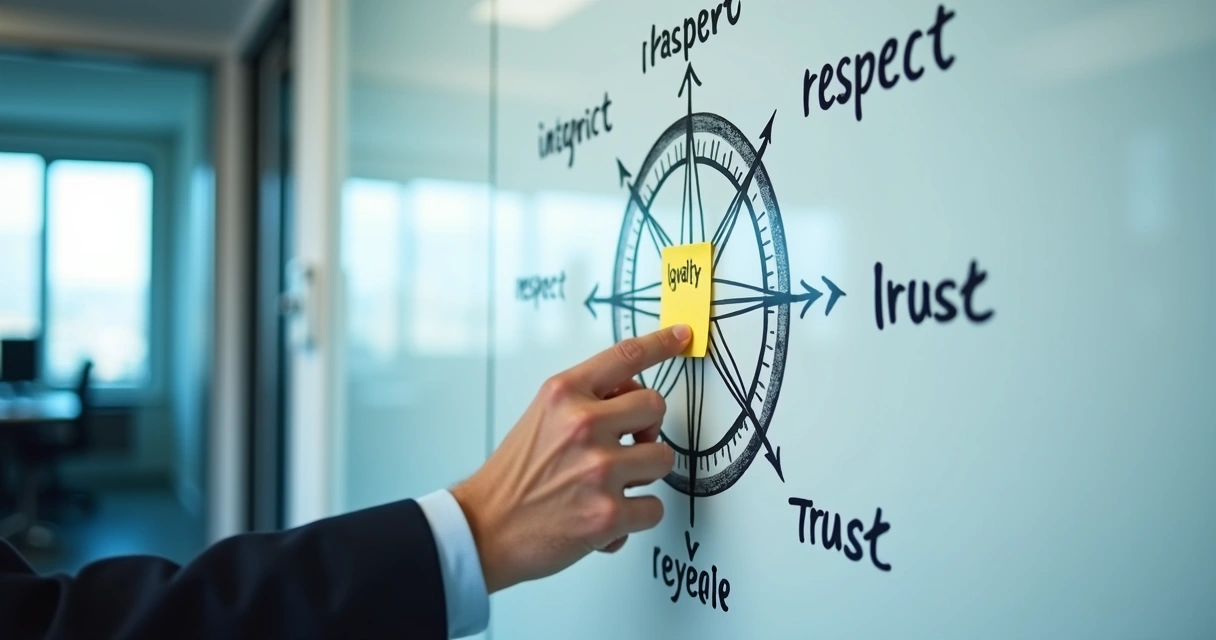
We often hear leaders say, “Our values are clear.” Yet in real workplaces, what guides behavior is not always what is written on a wall. It is often loyalty. Not the healthy kind rooted in trust and shared purpose, but a hidden kind shaped by fear, habit, family patterns, old power bonds, or a need to belong.
Unconscious loyalty can make people protect relationships, roles, or traditions even when those things go against the company’s stated values.
We have seen this happen in subtle ways. A manager avoids giving honest feedback because they feel loyal to a long-time employee. A founder keeps a harmful executive because “we built this together.” A team stays silent about unethical conduct because nobody wants to betray the group. On paper, the company stands for integrity, respect, and accountability. In practice, loyalty bends the system.
That is where value alignment starts to crack. Quietly. Then visibly.
What unconscious loyalty looks like at work
Unconscious loyalty is not always dramatic. Most of the time, it looks reasonable. It may appear as patience, commitment, or support. But under the surface, another force is active. A person is not acting from present clarity. They are reacting from an older bond.
We think of unconscious loyalty as a hidden agreement. It says, “I must stay faithful to this person, this group, or this pattern, even if it costs truth.”
In organizations, this can show up in several ways:
Defending poor behavior from high performers
Keeping outdated rules because “this is how we have always done it”
Promoting people based on personal closeness rather than shared values
Avoiding hard conversations to preserve emotional comfort
Hiding mistakes to protect the image of a leader or team
These patterns do not only affect morale. They distort judgment. They make people confuse loyalty with ethics, and silence with stability.
What stays hidden starts to lead.
Why values drift even when they are well written
A company may invest time in defining mission, principles, and codes of conduct. That work matters. But values do not become real because they are published. They become real when they are stronger than informal loyalties.
This is why some companies sound clear yet feel confusing from the inside. The official message says one thing. The emotional system says another.
We have noticed a familiar scene in many workplaces. A new leader arrives with fresh language about transparency and fairness. People nod. Meetings sound positive. Then a difficult decision appears. Suddenly, old alliances return. A protected person is spared. A concern is buried. A standard is bent. Everyone notices, even if nobody names it.
Employees do not measure values by statements. They measure them by what the system protects under pressure.
This gap has real weight. Research published by the National Bureau of Economic Research on corporate culture and firm value found that more than half of senior executives place culture among the top three drivers of company value. The same paper reports that 92% believe better culture would raise company value, yet only 16% think their culture is where it should be. We see in that gap a hard truth. Many organizations know culture matters, but fewer are willing to face the hidden loyalties that shape it.

How loyalty distorts value alignment
Value alignment means people can connect personal conduct, team norms, and company decisions to a shared ethical direction. Unconscious loyalty interrupts that connection. It creates competing rules that are rarely spoken aloud.
Instead of “we act with honesty,” the hidden rule becomes “we protect our own.” Instead of “we value accountability,” the hidden rule becomes “we do not question senior people.” Instead of “we respect people,” the hidden rule becomes “we keep peace at any cost.”
Once hidden rules take hold, three shifts tend to happen.
First, standards become uneven. Some people are held to values. Others are held to relationships.
Second, trust weakens. Employees sense that fairness depends on proximity to power, not on principle.
Third, values turn symbolic. They still exist in language, but not in lived decisions.
That tension can produce real damage. A survey from Columbia University’s School of Professional Studies on employee and employer value misalignment found that workers who see a mismatch between their values and their employer’s are about 2.5 times more likely to take actions that harm the employer’s interests. We should not treat that as a small culture issue. It points to a break in the bond between the person and the organization.
Common signs leaders should not ignore
Most teams do not say, “We are trapped in unconscious loyalty.” They show it through patterns. We suggest paying attention to repeated moments that feel strangely hard to address.
Some signs appear early:
Feedback is vague around certain people
Decisions change when a protected figure enters the room
Teams explain contradictions with phrases like “that is just how it works here”
High performers leave after saying the culture feels unclear
Employees stay outwardly polite but inwardly detached
We have also seen a more personal sign. A leader feels tired after making people decisions, not because the issue is complex, but because they are carrying an inner split. They know what the value says. They also feel bonded to an older loyalty. That tension drains clarity.
When loyalty and values pull in opposite directions, decision quality falls before results do.
How to bring values back into alignment
The answer is not to reject loyalty. Healthy loyalty matters. It supports trust, continuity, and care. The task is to make loyalty conscious, so it no longer operates above truth.
We believe leaders can begin with simple but honest work.
Start by naming where exceptions keep happening. Not once, but as a pattern. Ask who is repeatedly protected, what topic stays untouched, and which value loses force under strain.
Then create spaces where people can speak without social punishment. This does not mean endless debate. It means clear reflection with real listening.
It also helps to ask better questions:
Are we honoring a value, or preserving a bond?
Would we make the same choice if a different person were involved?
What silent rule is stronger than our written rule here?
These questions can feel uncomfortable. Good. Discomfort often marks the edge of honesty.
Conclusion
When a company says one thing and protects another, people feel it. They may not always have the words, but they feel the split. Unconscious loyalty is powerful because it can look like commitment while quietly weakening truth, fairness, and coherence.
We think the deeper work of value alignment is not only to define principles, but to notice what hidden bonds shape behavior when pressure rises. That is where culture is either strengthened or compromised.
If we want values to live in a company, we must be willing to ask what loyalty is serving, what it is hiding, and what it is costing. Only then can loyalty become clean, and values become real.
Frequently asked questions
What is unconscious loyalty in companies?
Unconscious loyalty in companies is a hidden attachment to people, groups, habits, or power structures that shapes behavior without open awareness. It often leads employees or leaders to protect relationships over truth, fairness, or stated company values.
How does loyalty affect value alignment?
Loyalty affects value alignment when it creates unwritten rules that compete with formal values. If people protect insiders, avoid accountability, or excuse harmful conduct, loyalty starts to guide decisions more than the company’s ethical principles.
Can unconscious loyalty hurt company culture?
Yes. Unconscious loyalty can hurt company culture by weakening trust, creating unfair standards, and making employees feel that values are not applied equally. Over time, this can produce silence, disengagement, and a loss of confidence in leadership.
How to identify unconscious loyalty at work?
We can identify unconscious loyalty by watching for repeated exceptions, protected individuals, vague feedback, and topics that nobody feels free to challenge. It often appears where teams defend contradictions instead of addressing them directly.
Why is value alignment important in business?
Value alignment matters in business because it supports trust, clearer decisions, and consistent behavior across the organization. When people believe the company truly acts on its values, commitment grows stronger and the culture becomes more stable.